The New Senior Tax Deduction
Published: 2/2/2026

You may have heard the promise of "no tax on Social Security." What Congress actually passed, as part of the One Big Beautiful Bill (OBBB) Act, is something different: a new $6,000 deduction for people 65 and older, available for tax years 2025 through 2028. It doesn't change how benefits are taxed, but for many retirees it has a similar effect.
Who Qualifies
To claim the new senior tax deduction, you must be age 65 or older by the end of the tax year (the same rule used for the existing additional standard deduction for seniors) and provide a valid Social Security number. If you're married, you must file a joint return — married filing separately does not qualify.
Deduction Amount
| Tax Year | Per Person | Joint (Both 65+) |
|---|---|---|
| 2025-2028 | $6,000 | $12,000 |
If only one spouse in a joint return is 65 or older, the couple receives half the joint amount ($6,000 instead of $12,000).
Income Phase-Outs
The deduction is reduced for higher-income filers based on modified adjusted gross income (MAGI). It phases out by $60 for every $1,000 of MAGI above the threshold.
| Filing Status | Phase-Out Begins | Fully Phased Out |
|---|---|---|
| Single | $75,000 | $175,000 |
| Married Filing Jointly | $150,000 | $250,000 |
For example, Carol is single, age 68, with a MAGI of $95,000 in 2026. That's $20,000 over the $75,000 threshold, so her deduction is reduced by 20 x $60 = $1,200. She can deduct $4,800 instead of the full $6,000.
ProjectionLab
Sponsor
ProjectionLab Sponsor
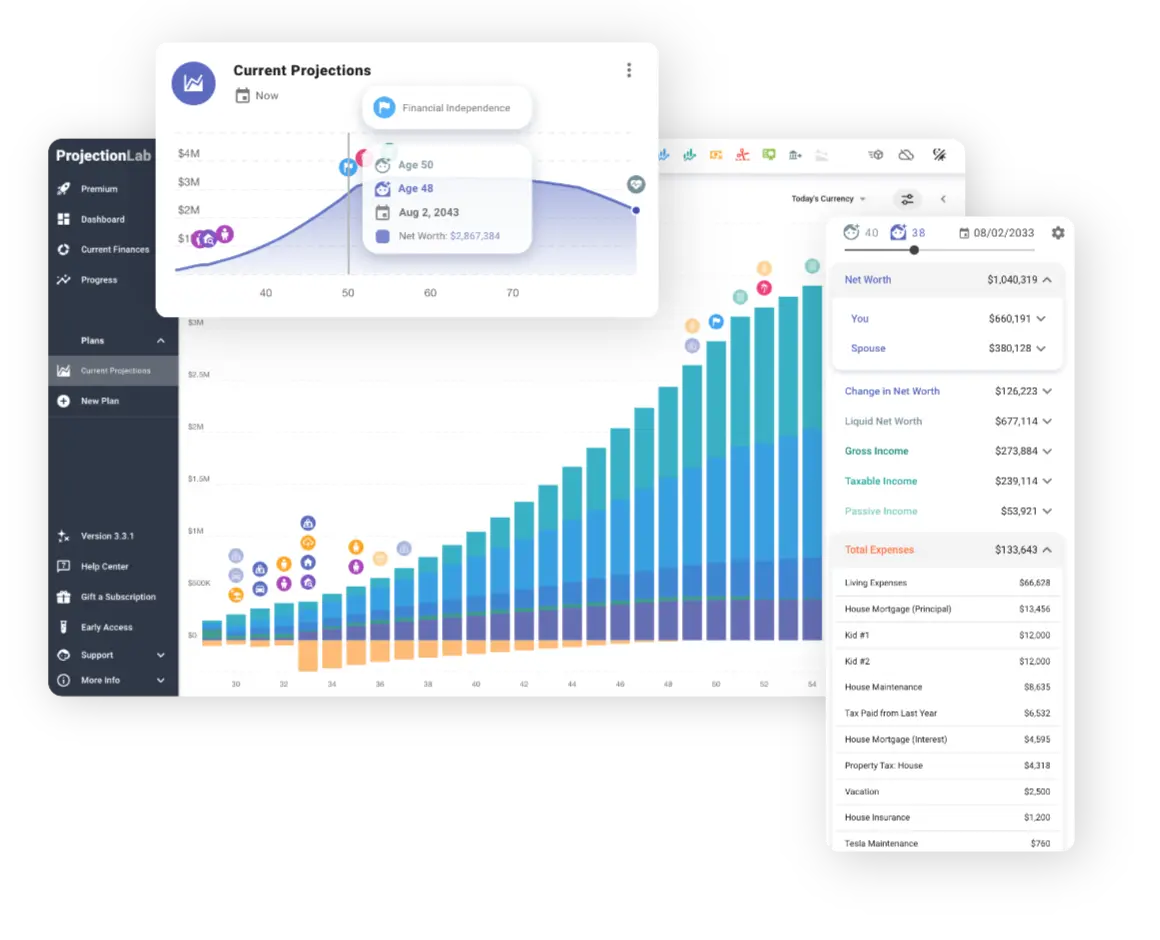
Already optimizing your Social Security? Take your retirement planning to the next level with ProjectionLab, the comprehensive financial modeling platform trusted by serious planners.
- Monte Carlo simulations: Run thousands of market scenarios using 150+ years of historical data to stress-test your plan.
- Advanced modeling: Model complex strategies including Roth conversions, tax-loss harvesting, and dynamic withdrawal rates.
- Professional-grade analytics: Analyze success probabilities, sequence of returns risk, and optimal asset allocation across market cycles.
How It Stacks with Existing Deductions
The new senior tax deduction is in addition to both the regular standard deduction and the existing additional standard deduction for taxpayers 65 and older. It does not replace either.
A single filer age 67 in 2026 would get the standard deduction (estimated ~$16,150), plus the existing additional senior deduction (~$2,000), plus the new $6,000 — a total of about $24,150. A single senior with gross income at or below that amount would owe zero federal income tax.
A married couple filing jointly, both age 66, would get the standard deduction (~$32,300), plus two existing senior additions (~$3,200), plus two of the new deductions ($12,000) — about $47,500 in total.
Impact on Social Security Benefit Taxation
Does this mean Social Security is no longer taxed? Not exactly. The provisional income formula that decides how much of your benefit is taxable hasn't changed at all. Up to 85% of benefits can still be included in taxable income under the same rules that have been in place since 1993.
What the deduction does is reduce your overall taxable income after that calculation. Your provisional income (AGI + tax-exempt interest + half of Social Security) is figured the same way as before, and so is the taxable portion of your benefits. The new deduction then reduces your taxable income, potentially to zero.
In practice, most retirees — roughly 90% of Social Security recipients — will end up owing no federal tax on their benefits while this deduction is in effect, even though the benefits are still technically taxable.
Consider Bob, single, age 68, in 2026, with $20,000 in Social Security benefits and $15,000 in pension income. His provisional income is $15,000 + ($20,000 / 2) = $25,000, which is at the threshold for single filers, so none of his Social Security is taxable. That leaves an AGI of $15,000 against roughly $24,150 in total deductions. His taxable income is $0, and he owes no federal tax.
Planning Strategies
If your income is near the phase-out thresholds, it's worth paying attention to what counts toward MAGI. Roth conversions, required minimum distributions, and realized capital gains all increase it. If you're planning Roth conversions, you might keep them small enough to stay below the threshold — or do larger conversions in years when you wouldn't qualify for the deduction anyway. The same thinking applies to spreading asset sales across multiple years, harvesting capital losses, and timing your first RMD if you have flexibility there.
Going the other direction, if you're still working at 65 or older, contributions to a traditional 401(k) or IRA reduce your MAGI and can help keep you under the threshold.
This Is a Temporary Provision
The deduction applies only to tax years 2025 through 2028. Congress could extend it, but as the law stands today, 2028 is the last year. Don't build a long-term plan around it.
Learn More
For the official IRS guidance on this provision, see the IRS newsroom announcement.
For a detailed explanation of how Social Security benefits are taxed federally, including the provisional income formula, see our Federal Taxation of Social Security Benefits guide. For information about working while receiving benefits, see our Earnings Test guide.
To see what your own benefit would be, try the ssa.tools calculator with your earnings record.